
Setting Up a Home Car Washing Area That Respects the Neighbourhood
Washing a car at home involves more than finding a hose and a bucket. Water use, runoff, surfaces and nearby property all deserve consideration.
Check where water flows from the proposed washing area. A driveway may drain towards the street, a garden or a stormwater system. Local requirements for vehicle washing and discharge vary, and some properties are unsuitable for particular methods. Check municipal guidance before using detergents or products that may enter drainage systems.
Choose the location thoughtfully
Look for a safe, stable surface with enough room to move around the car without obstructing traffic or access. Avoid washing in a position that exposes other property to spray or creates a slippery shared path. A shaded location may make it easier to follow a product's directions concerning drying and temperature.
Organise the equipment
Select tools and cleaners appropriate for the vehicle's surfaces. Keep electrical equipment and connections used in outdoor conditions within their approved operating requirements. Follow equipment instructions and avoid directing a pressure jet towards people, vulnerable vehicle components or unsuitable surfaces.
Consider alternatives
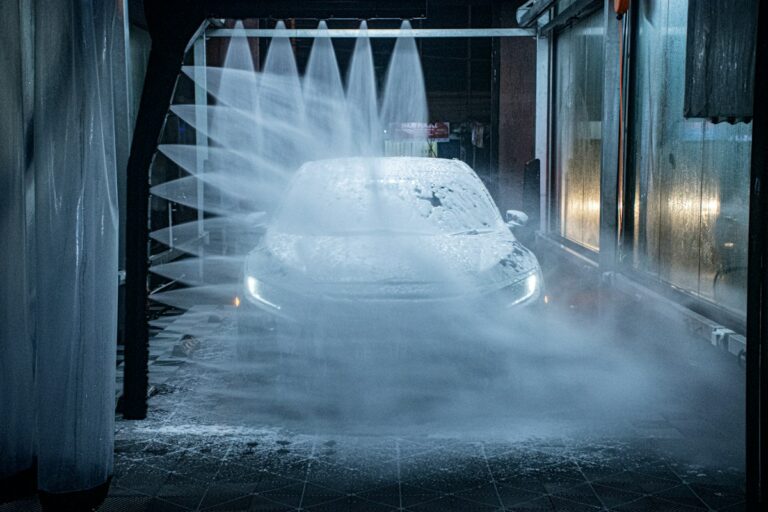
Where runoff cannot be managed appropriately, a commercial car wash with suitable water handling may be the more practical option. Keep the chosen routine compatible with any existing film, coating or paint finish. The goal is a clean vehicle without transferring the mess to another property or an unsuitable drain.
Australian owners should check local council and water-provider guidance about washing and runoff on private property.
Photo: Brad Starkey / Unsplash. Stock image for context; not a photograph of a project reviewed in this article.