
Caring for Light-Coloured Upholstery in a Daily-Use Car
Light upholstery can show transfer marks and everyday dirt more readily than a dark interior. Repeated harsh cleaning, however, can create its own problems.
Identify the seat material using the vehicle documentation or a qualified provider. Leather, coated leather, synthetic materials and textile surfaces can require different products. Notice where marks occur most often, such as the seat edge, centre cushion or area around a safety belt. Record how the material is used rather than assuming every mark has the same cause.
Start with compatible care
Use only methods and products suitable for the identified material, following the manufacturer's instructions. Test a permitted product according to its directions in an inconspicuous area if recommended. Avoid soaking seats or using household solvents to tackle unknown marks. Modern seats may contain electrical or safety components that require particular care.
Discuss stubborn marks before treatment
A professional detailer can assess whether a mark is removable, whether colour has transferred or whether the surface itself has changed. Ask what improvement is realistic and whether a specialist repair would be needed. Do not expect aggressive cleaning to restore all upholstery to its original appearance.
Reduce repeated exposure
Remove ordinary debris regularly and deal with spills using approved methods. Consider clothing or other materials that repeatedly contact the affected area. Any protective cover should be compatible with the vehicle and its safety equipment. A routine based on the actual upholstery is more useful than a product marketed for every interior.
For a UK daily driver, note whether marks recur after contact with dark clothing or other commonly used materials.
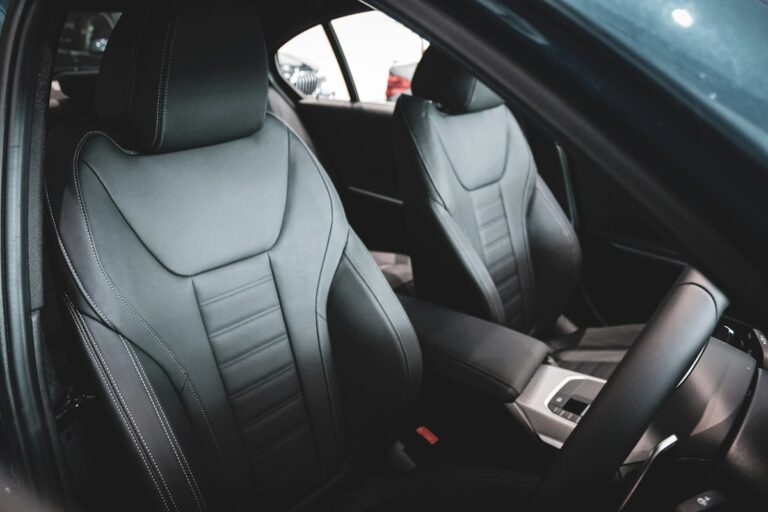
Photo: Pheng Moua / Unsplash. Stock image for context; not a photograph of a project reviewed in this article.